Archive

environment

1) MEDIA


2) ABOUT:
Printed Nests, een serie opensource ontwerpen voor futuristische vogelhuisjes maakten die je gratis zijn te downloaden. “Ons streven is om een voortdurende cyclus van nakomelingen, evolutie en uitbreidingen te garanderen,” licht de website van Printed Nests toe. Inmiddels hangen er al zo’n 88 nestjes in 66 verschillende steden, en de hoop is dat dat aantal de komende tijd flink zal uitbreiden.

We are team of architects & designers who explore and develop possibilities of 3D printing technology.

3D printing technology as a way of developing a product which is constantly evolving and being perfected based on errors of previous prototypes, much as living organisms are. Every product has its own charm as well as errors. It is not perfect and imperfections make it unique.

3) CREATOR:

4) RULES /RESTRICTIONS:
3D printed product/Urban development Feeding birds has never been easier. A opensource 3D object wich can be downloaded to make your own Bird feedhouse. you can adjust it or just print it in the colour of choice.

World wide community of people connected by a product
which means design, rapid prototyping, architecture, technology,
open-source, green thinking and more…

5) COMMENTS

6) LINKS:
http://www.thingiverse.com/thing:352464
http://www.printednest.com/

About
The Belgique photographer catches the interaction between the virtual world and the ‘real’ world. Inspired by films and games these people dress them selfs up to live in between those worlds of fantasy and reality, to escape the last one. they surround them selfs in a setting, were they dress their selfs up in fluffy costume’s or in a zentai suite. Charlotte catches them on photo in a different setting (in her own houser anonymous hotelroom), to show the contrast between these worlds.

Creator
Charlotte Lybeer

Rules/Restrictions
-Anonymous
-has to wear a suite
-Has to be in an environment that has nothing to do with the costume.

Comments
It gave me an inside look of how this look like. It is a fascinating aspect to escape the world in a costume, some use drugs others use costumes. To catch this idea, of living in a certain way, is very interesting because you do not see this very often on the streets…right?

0401_Lybeer_Forfoax_2012517177_1


Schermafbeelding 2015-05-18 om 18.34.35Schermafbeelding 2015-05-18 om 18.34.24

ABOUT

Flux Furniture  is a chair that’s made of one specific rule that decided the whole collection. The creators wanted to create a chair that could be folded out of one piece. This for reasons like, it would make it easy to take it with you and it would be better for the environment in terms of fabrication and shipping. The creators are from TU Delft and they won a price when proposing the idea. They decided to team up and actually make this furniture, which has started from the chairs to actual bars. Fun fact: it’s also possible to custom the designs to, for example, chose a color or put your brand on it.

CREATORS

Tom Schouten and Douwe Jacobs

RULES/RESTRICTION

They started there project with the one simple rule, they wanted to make a chair (what later would be a whole line of furniture) foldable. This would take a lot of mathematics to get it right.

COMMENT

What I like about this project is that it has actually a sustainable aspect. The rule/restriction of making it foldable would make a very specific design and it isn’t only limited to one piece of furniture.

LINKS

http://www.youtube.com/watch?v=JYSDDiutWmg

http://www.fluxfurniture.com/

SecondCollection1 SecondCollection2 SecondCollection3 SecondCollection4

ABOUT: Woolen blanket collection by Icelandic design collective Vík Prjónsdóttir.

CREATOR: VÍK PRJÓNSDÓTTIR consists of Egill Kalevi Karlsson, Thurídur Rós Sigurthorsdóttir, Hrafnkell Birgisson, Brynhildur Pálsdóttir and Gudfinna Mjöll Magnúsdóttir, five Icelandic designers who work with product design, art, fashion and food design.

RULES: All the pieces in the collection are inspired in some way or another from Icelandic customs, mythology and the country’s characteristic climate.

COMMENTS: Collection is beautiful and the same time playful which I really like. The blankets seems to be very high quality and handmade and I would definitely buy one of those to myself.

LINKS: http://www.dezeen.com/2010/03/23/second-collection-by-vik-prjonsdottir/

Nasa_collection1 Nasa_collection2 Nasa_collection3

ABOUT: In late December, 2014, the NASA Jet Propulsion Laboratory’s (fictional) Exoplanet Travel Bureau released these 1930s-style travel posters depicting three exoplanets as destinations – hypothetical, so far – for future travel.

CREATOR: NASA´s Exploration Program. Jet Propulsion Laboratory, Pasadena CA.

RULES: The posters depict hypothetical scenarios on real planets discovered by NASA‘s Kepler telescope. Each of NASA’s poster designs highlights a feature of a planet that could draw visitors, including stronger gravity for extreme sports and double sunsets.

COMMENTS: I really like these 30´s look posters and I think it is interesting to imagine what life, or holiday, could be on those discovered planets.

LINKS: http://earthsky.org/space/nasas-way-cool-retro-posters-for-futuristic-space-travel

ColonelCollection ColonelCollection2 ColonelCollection3

ABOUT: Isabelle Gilles and Yann Poncelet, founders of French design brand Colonel, have prepaired a collection using traditional craft techniques such as woven rattan and marquetry with colourful accents. Colonel´s 2015 collection comprises a sideboard, a wardrobe, a table lamp, a set of pendant lamps and an armchair.

CREATOR: Colonel

RULES /RESTRICTIONS: Their key inspiration for the collection was to use traditional techniques and craftmanship like caning and marquetry and to mix them with light wood and bright colours, to make it more contemporary,

COMMENTS: I really like the collection: it is light and simple but yet really interesting. Furniture has touch of scandinavian style mixed with 60´s style and I love that their main idea was to use traditional techniques and craftmanship.

LINKS: http://www.moncolonel.fr/en/

masks_B16_SBP_LRmasks_B19_SBP_LR masks_B1_SBP_LR masks_B25_SBP_LRmasks_132B_SBP_LR masks_078B_SBP_LR

ABOUT

The rope masks from studio Bertjan Pot came out of the idea to tell stories, this started as a material experiment. As he wanted to find out by stitching a rope together to make a large flat carpet. Instead of flat, the samples got curvy. When he was about to give up on the carpet, his work partner Vladi came up to him with the idea of ​​shaping the rope into masks. The possibilities of this idea turned out to be endless, so he’s meeting new faces every day.

CREATOR

Is the dutch product designer Bertjan Pot (probably better known as Random Light). In his way to work he always starts with a material research, which is basically the starting point of each product created by Studio Bertjan Pot. The outcome is usually an interior product showing a fascination for techniques, structures, patterns and colors. Most experiments start quite impulsively by a certain curiosity for how things would function or how something would look. From there Pot takes on challenges with manufacturers to explore possibilities and push the boundaries a bit. The reward for each challenge is a new one.

RULES/RESTRICTIONS

The rope masks cannot be done by every person who wanna stich its own mask, because the technique is not published which makes this project more personal but not open. The fact that the collection is made out of the motivation of fun is one of the most important rules. I think Berjan Pot expands with this project his own personal collection which is more an art piece of the ironic translation of everyday faces.

COMMENTS

The very nice part in this project is that the mask idea came out of a mistake or misunderstanding of a material test what makes this project more interesting and spontaneous. Every mask is a unique piece, coming out of an impulse or inspiration that’s different and new every day.

LINKS

Studio Bertjan Pot

Tangible-Truths-by-Sybille-Paulsen_dezeen_BANTangible-Truths-by-Sybille-Paulsen_dezeen_468_0

ABOUT

Sybille Paulsen is a Berlin based designer who right now focusses on the creation of jewellery made out of hair from cancer diagnosed patients who undergo chemotherapy. Women cut off their hair before it slowly falls out and give it to Sybille to transform it into jewellery within two weeks in which she also gets closer to the patient. It can help patients and their families during this transformation and helps as a starting point for difficult conversations with family or friends.


CREATOR

The collection of jewellery is created by the artist Sybille Paulsen in cooperation with the client, which is the patient (and family).


RULES/RESTRICTIONS

The collection is in her own hand because she is the only one who actually makes them. The jewellery is only made for female cancer diagnosed patients but it is not made entirely of hair. Some pieces also include precious metals like brass, silver or gold or made of cast-resin pieces in colours that have value to the wearer.


COMMENTS

I don’t know if this counts as open design. It is more like a normal project with customer and producer, but then specifically on hair but it might as well be a client buying a table from a table designer but I really like the idea of the project because the designer works closely with the patient and the result is an emotionally precious product made from their own identity.


LINKS

http://www.dezeen.com/2015/03/07/sybille-paulsen-cancer-patients-hair-chemotherapy-jewellery-tangible-truths/

http://www.sybille.me/


ABOUT

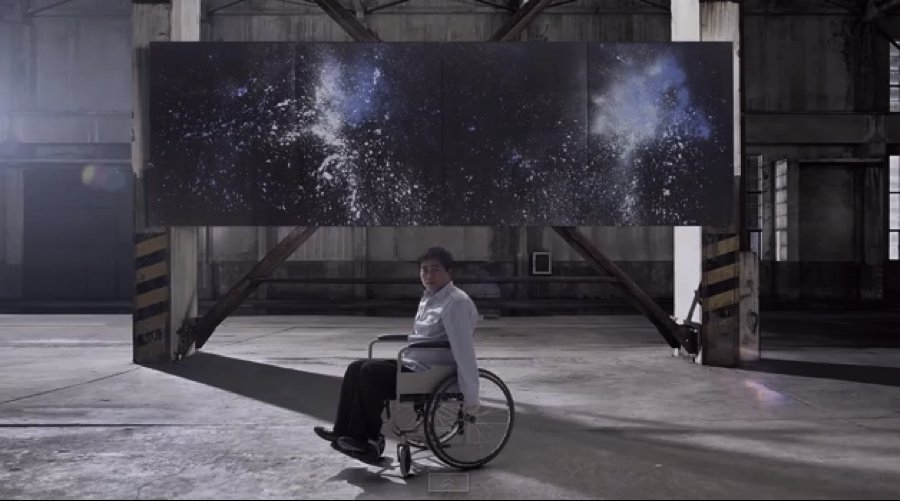
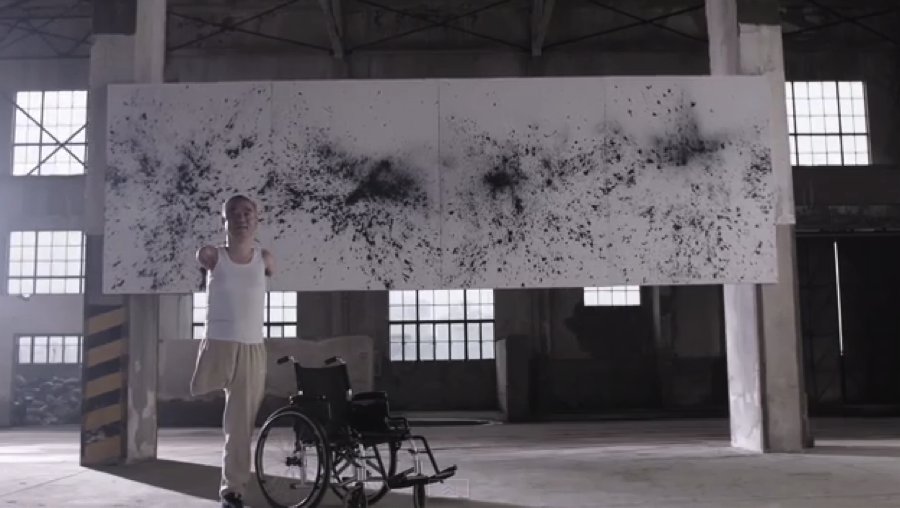
The Mind Art project took 16 handicapped individuals from around China and harnessed their mental prowess and concentration to help them express themselves on canvas. The participants, recruited via social media, first chose the paint colors that they wanted to use. The paint was then poured into balloons that were strapped with small detonators, and the balloons were lowered into an open-air enclosure created by the coming together of four large canvas panels.
The participants were each outfitted with a headset, which used a NeuroSky processing unit to capture electronic signals from the brain and relay them to the balloons. By concentrating intently, the participants triggered the detonations. The exploding balloons then created magnificently abstract paintings, full of color and character.

CREATOR

The project is a collaboration between Chinese artist Jody Xiong and acrylic paint supplier Winsor & Newton, in an attempt to raise awareness of the everyday struggles of the disabled population, while earning recognition and respect for these individuals.

RULES / RESTRICTIONS

The tools are already decided for the participants: four canvases and one or more colours of paint. The only way the participants can express themselves in art is through mind power; however, the results are still very diverse and unique for each participant.

COMMENTS

A wonderful way of raising awareness by letting them create art. The project makes you think about how disabled people need to go around their day – without the project explicitly asking you to. Also a great aspect of the project is that the paintings got exhibited with great success.

Petit-Volcans-by-Iiif_dezeen_468_2 Petit-Volcans-by-Iiif_dezeen_468_7 Petit-Volcans-by-Iiif_dezeen_468_11 Petit-Volcans-by-Iiif_dezeen_468_15Petit-Volcans-by-Iiif_dezeen_bn01

ABOUT

Icelandic design collective Iiif who made a glassware collection comprising five vessels that represent different types and stages of volcano.

CREATOR

Liif (Agla Stefánsdóttir, Sigrún Halla Unnarsdóttir & Thibaut Allgayer)

PRODUCTION

CIAV Meisenthal (French)

RULES AND RESTRICTION

Liif created a (vases & bowls) collection which are inspired by the five different stages of a volcano. The different stages are called: The submarine volcano – The dormant volcano – The subglacial eruption – The lava eruption and the final stage The crater lagoon every object shows one stage. Each product is made by two glass blowers blowing simultaneously, each responsible for one part of the product.

COMMENTS

The reason why choosed this project is that i really like the way how they came up with the idea of making a collection of glassware whos inspired of the different levels of a volcano eruption, this includes not only the idea shapes and colors but also the technique how they are produced.

LINKS

http://iiif.is/PETITS-VOLCANS-1

Design a site like this with WordPress.com
Get started